

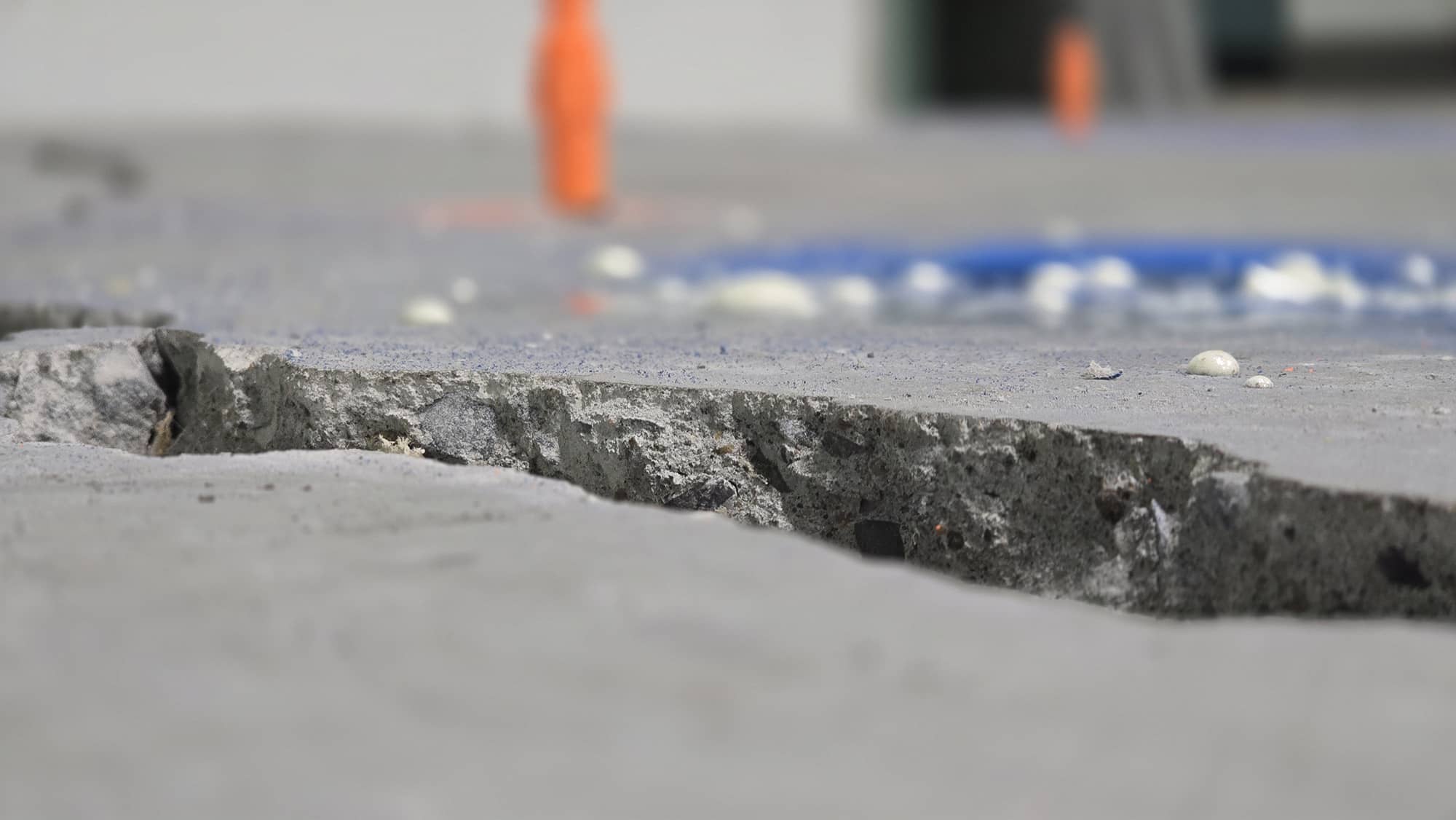
Concrete garage floors and driveways, sidewalks, concrete patios and terraces, concrete walkways, sidewalks around in-ground pools, concrete shed slabs.
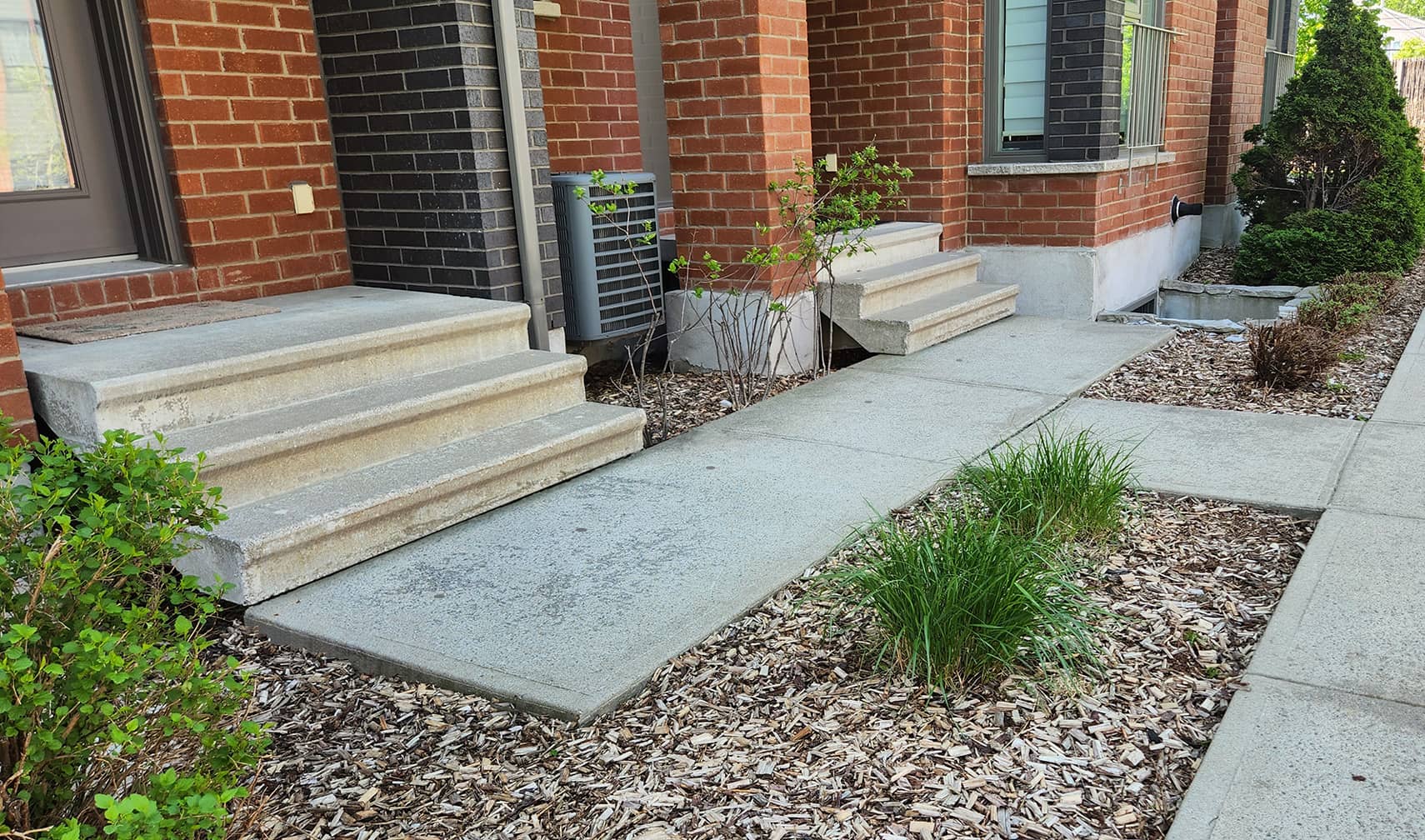
Warehouse floors, loading areas and docks, commercial parking lots, sidewalks and walkways, restaurant terraces, building entrances, industrial surfaces.
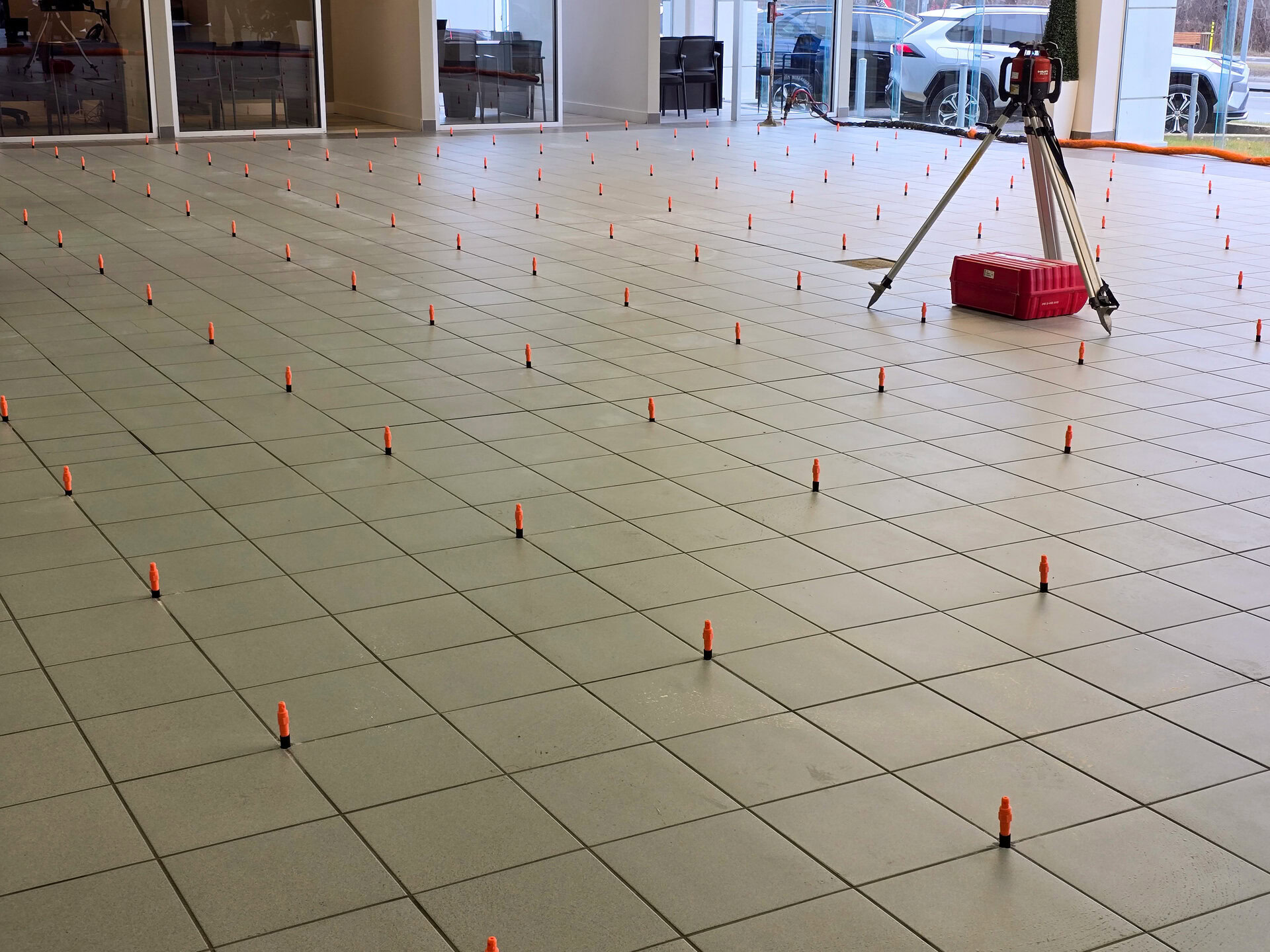
Problem analysis and work estimation.
15 mm holes (size of a nickel) are strategically drilled in the slab.
The foam is injected under the slab, expands and lifts the concrete to its original level.
The holes are sealed and the area is ready for use within hours.
Signs that a concrete slab needs leveling include: a visible slope or unevenness between sections, water pooling on the surface after rain, cracks that widen over time, or a step forming between the slab and the adjacent structure. The longer you wait, the larger the void beneath the slab grows and the more costly the repairs become.
The void under a concrete slab forms mainly due to natural and structural factors that affect the soil over time. Here are the main reasons:
Erosion occurs when water seeps under the slab and gradually carries away the soil. This can be caused by:
During construction, if the soil under the slab was not properly compacted, it can naturally settle over time. This phenomenon creates void areas under the slab, causing gradual sinking.
In some cases, organic materials (roots, wood, construction debris) can decompose under the slab, leaving a void.
The holes are sealed and the area is ready for use within hours.
Erosion occurs when water seeps under the slab and gradually carries away the soil. This can be caused by:
During construction, if the soil under the slab was not properly compacted, it can naturally settle over time. This phenomenon creates void areas under the slab, causing gradual sinking.
In some cases, organic materials (roots, wood, construction debris) can decompose under the slab, leaving a void.
The holes are sealed and the area is ready for use within hours.
Leveling a slab instead of replacing it prevents tons of concrete from ending up in landfills and avoids producing new cement, one of the largest industrial CO2 emitters. The polyurethane used is inert, insoluble, and releases no chemicals into the soil or water.